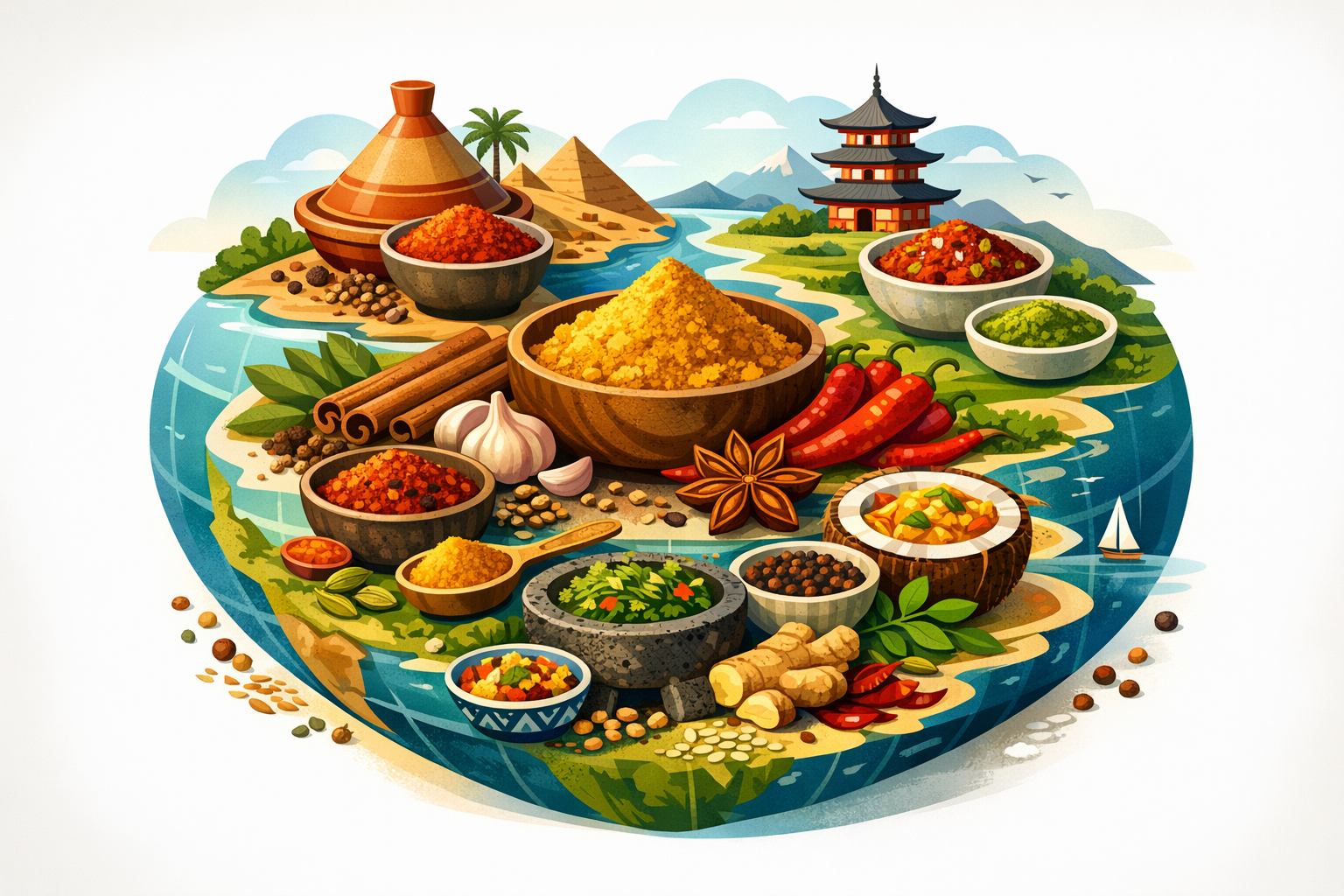
Walk into any kitchen that produces memorable food and you will find spice blends. Not individual jars of cumin or coriander sitting in isolation, but carefully proportioned combinations that represent generations of culinary wisdom. These blends are more than convenience. They are cultural fingerprints, encoding the flavor preferences, trade routes, and agricultural realities of entire civilizations.
Building a collection of global spice blends is one of the fastest ways to expand your cooking range. A single tablespoon of the right blend can transport a simple roasted chicken, a pot of rice, or a bowl of roasted vegetables into an entirely different culinary tradition.
Garam Masala: The Warm Heart of Indian Cooking
Garam masala translates to "warm spice blend," and warmth defines its character. Unlike curry powder, which is largely a British colonial invention standardized for export, garam masala has deep roots in Ayurvedic tradition. The spices were chosen not just for flavor but for their believed ability to raise body heat and aid digestion.
The blend varies enormously across India's regions. North Indian versions tend toward the heavy, warming spices: cardamom, cinnamon, cloves. South Indian interpretations lean into black pepper and curry leaves. Kashmiri garam masala adds dried rose petals for a floral quality absent in other versions. There is no single "authentic" recipe, only regional truths.
Traditional Components
A classic North Indian garam masala contains cumin seeds, coriander seeds, green cardamom pods, black cardamom pods, whole cloves, black peppercorns, cinnamon sticks, and bay leaves. Some regional variations add mace, nutmeg, or fennel seeds. The proportions vary dramatically from household to household; every Indian family claims theirs is the authentic version.
Making It at Home
Toast the whole spices in a dry skillet over medium heat for 2 to 3 minutes, shaking the pan frequently, until fragrant and slightly darkened. Let them cool completely, then grind in a spice grinder or mortar and pestle. A good starting ratio: 3 tablespoons cumin seeds, 2 tablespoons coriander seeds, 1 tablespoon black peppercorns, 2 teaspoons cardamom seeds (removed from pods), 1 teaspoon whole cloves, one 3-inch cinnamon stick, and 1 whole nutmeg (grated).
Where It Shines
Garam masala is typically added at the end of cooking or just before serving, which preserves its aromatic complexity. It elevates butter chicken, transforms a simple dal from flat to fragrant, and makes a stunning finishing spice for roasted cauliflower tossed with ghee.
Za'atar: The Evergreen Herb of the Levant
Za'atar is both a wild herb (a type of oregano native to the Eastern Mediterranean) and the blend that bears its name. Archaeological evidence suggests humans have been using wild za'atar for over 5,000 years. In Palestinian, Lebanese, Syrian, and Jordanian kitchens, za'atar is as fundamental as salt.
The blend carries significant cultural weight. In Palestine, mothers spread za'atar on bread for children before school exams, believing it sharpens the mind. In Lebanon, it is the first food offered to guests. These are not just flavoring traditions but social rituals built around a handful of dried herbs.
Traditional Components
The blend combines dried za'atar or oregano, sumac, toasted sesame seeds, and salt. Some versions include dried thyme, marjoram, or savory. Sumac provides the blend's distinctive tangy, almost citrusy note, while the sesame seeds add nuttiness and texture. The ratio typically favors the herb, with sumac as a strong secondary presence: 4 parts dried oregano/thyme, 2 parts sumac, 1 part sesame seeds, salt to taste.
Where It Shines
Mixed with good olive oil and spread on flatbread before baking, za'atar creates manoushe, the beloved Lebanese breakfast. It's extraordinary on labneh (strained yogurt), roasted eggs, and grilled halloumi. Sprinkled over hummus with a generous pour of olive oil, it turns a simple dip into something remarkable.
Ras el Hanout: Morocco's Top Shelf Blend
The name translates to "head of the shop," meaning the spice merchant's finest blend. In Moroccan souks, each vendor guards a proprietary recipe, sometimes containing 30 or more ingredients. Ras el hanout represents the pinnacle of the spice merchant's art, and buying it is an act of trust between customer and seller.
Some historical recipes included ingredients that would alarm modern cooks: Spanish fly (a beetle-derived aphrodisiac), hashish, and belladonna berries. These additions, now illegal and dangerous, reflected the blend's original purpose as both flavoring and folk medicine. Modern versions are entirely food-safe and no less complex.
Traditional Components
Core spices include cumin, coriander, turmeric, ginger, cinnamon, black pepper, cardamom, cloves, nutmeg, and allspice. More elaborate versions add rose petals, lavender, long pepper, grains of paradise, cubeb pepper, and ash berries. The blend is intentionally complex, with no single spice dominating. A solid home version uses equal parts cumin, coriander, and ginger, half parts cinnamon, turmeric, and black pepper, and quarter parts cardamom, cloves, nutmeg, and allspice.
Where It Shines
Ras el hanout defines Moroccan tagines, those slow-simmered stews of meat, dried fruit, and vegetables. It's essential in bastilla, the celebrated pigeon or chicken pie with its layers of flaky pastry. Rubbed onto lamb shoulder before roasting, it produces some of the most aromatic meat you will ever taste.
Chinese Five-Spice: Balance in a Jar
Chinese five-spice powder embodies the Taoist principle of balance among the five flavors: sweet, sour, bitter, salty, and pungent. Each spice in the traditional blend represents one of these flavors, creating a harmony that complements the umami-rich sauces and techniques of Chinese cooking.
The blend dates back centuries, though its exact origins are debated. What is certain is that star anise and Sichuan peppercorn, two of its core ingredients, are native to China and have no easy substitutes. Star anise in particular gives five-spice its instantly recognizable licorice-forward aroma.
Traditional Components
The classic five are star anise (sweet/licorice), cloves (pungent), cinnamon or cassia (sweet/warm), Sichuan peppercorns (numbing/citrusy), and fennel seeds (sweet/anise). Some variations substitute ginger, white pepper, or orange peel for one of the five. Star anise usually dominates, comprising roughly a third of the blend by weight.
Where It Shines
Five-spice is the secret behind Cantonese roast duck and char siu (barbecued pork). Mixed into a marinade with soy sauce, rice wine, and honey, it creates a lacquered, deeply flavored crust. It also works beautifully in baking; a pinch in chocolate brownies or spice cookies adds intriguing depth.
Herbes de Provence: Sun-Dried Southern France
This blend captures the wild herb-covered hillsides of Provence, where lavender, thyme, and rosemary grow wild in the rocky soil. While the commercial version is a 1970s creation aimed at tourists, the tradition of combining these herbs stretches back centuries in Southern French home cooking.
The lavender inclusion is what trips up many cooks. Too much lavender makes food taste like soap. Too little and you lose the blend's signature character. Authentic Provencal cooking uses culinary lavender sparingly, just enough to perfume the dish without dominating. A jar of herbes de Provence should smell like a hillside walk on a warm afternoon, not a bath product.
Traditional Components
Thyme, rosemary, oregano, marjoram, and savory form the core. Lavender is the defining addition that separates herbes de Provence from generic "Italian seasoning." Some blends include basil, tarragon, or fennel pollen. The herbs should all be dried; fresh herbs have too much moisture variation to blend consistently. Use equal parts thyme, rosemary, and oregano, with half parts marjoram and savory, and a restrained pinch of lavender.
Where It Shines
Rubbed under the skin of a chicken before roasting, herbes de Provence produces a bird that tastes like a Provencal farmhouse dinner. It's perfect mixed into olive oil for grilled vegetables, stirred into goat cheese for a spread, or sprinkled over ratatouille in its final minutes of cooking.
Berbere: Ethiopia's Fiery Foundation
Berbere is to Ethiopian cooking what miso is to Japanese cuisine: an essential, irreplaceable foundation. The blend is complex, hot, and deeply aromatic, built on a base of dried chili peppers enriched with a dozen or more supporting spices.
Ethiopia has one of the oldest spice trading traditions in Africa, situated at the crossroads of trade routes connecting the Indian Ocean, the Red Sea, and the African interior. This geographic position gave Ethiopian cooks access to spices from India, Arabia, and Southeast Asia, which they combined with local ingredients into blends of remarkable complexity.
Traditional Components
Dried guajillo or ancho chilies provide the base, supported by paprika for color and depth. Warming spices include fenugreek, coriander, cardamom, black pepper, allspice, cinnamon, cloves, and ginger. Many recipes include a small amount of rue, a bitter herb rarely used outside Ethiopian cooking. Garlic and onion (either fresh or powdered) round out the blend. The chili component should comprise about 40% of the total volume, with the remaining spices balanced for warmth rather than heat.
Where It Shines
Berbere is essential in doro wot, the slow-simmered chicken stew that is Ethiopia's national dish. Combined with niter kibbeh (spiced clarified butter), it forms the flavor base for nearly every Ethiopian braise. Mixed with oil and honey, it creates an extraordinary glaze for roasted root vegetables.
Shichimi Togarashi: Japan's Seven-Spice Heat
Shichimi togarashi, or seven-flavor chili pepper, has been produced in Japan since the 17th century. Spice shops in Tokyo's Asakusa district still blend it to order, adjusting the ratios to each customer's preference. The most famous shop, Yagenbori, has been operating at the same location since 1625, making it one of the oldest continuously operating spice businesses in the world.
The blend represents the Japanese approach to spice: restrained heat with layered complexity. Where many chili-based blends aim for raw fire, shichimi balances its heat with citrus brightness, herbal depth, and nutty richness.
Traditional Components
Red chili pepper (togarashi) provides the heat. The remaining six components vary by maker but typically include sansho (Japanese pepper), dried citrus peel (usually yuzu or mandarin), black and white sesame seeds, ground ginger, nori seaweed, and hemp seeds. Some blends substitute poppy seeds or shiso for one element. Chili comprises about a third of the blend, with the other ingredients in roughly equal proportions.
Where It Shines
Shichimi belongs on udon and soba noodle soups the way black pepper belongs on a steak. It transforms a bowl of simple miso soup, elevates tempura dipping sauce, and brings life to grilled yakitori. Sprinkled over buttered popcorn, it creates one of the best snacks you will ever eat.
Baharat: The Arabian All-Purpose Blend
Baharat simply means "spices" in Arabic, and it serves as the default seasoning blend across much of the Middle East. Like garam masala, it is warm rather than hot, designed to complement rather than overpower the ingredients it seasons. The two blends share several ingredients, reflecting the ancient spice trade connections between India and Arabia.
Every country in the region has its own baharat tradition. Iraqi baharat tends toward heavier cinnamon. Tunisian baharat includes dried rose petals. The Gulf states often incorporate dried lime, called loomi, which adds a piercing, almost fermented citrus note unlike anything else in the spice world.
Traditional Components
Black pepper, paprika, coriander, cumin, cinnamon, cloves, nutmeg, and cardamom form the standard blend. Turkish baharat often adds dried mint. Gulf versions may include dried lime (loomi) or saffron. The proportions lean toward paprika and cumin, which together should represent about half the blend's volume.
Where It Shines
Baharat seasons kofta (spiced ground meat), rice pilafs, and stuffed vegetables across the Arab world. Rubbed onto lamb chops before grilling, it produces a warmly spiced crust. Stirred into tomato sauce for baked eggs, it adds the complexity that makes the dish memorable.
Jerk Seasoning: Caribbean Fire and Fragrance
Jerk seasoning traces its origins to the Maroons, escaped enslaved people in Jamaica who developed the technique of preserving and flavoring meat with local spices and slow-smoking it over pimento (allspice) wood. The technique was a survival adaptation: the spice blend acted as a preservative in the tropical heat, while the smoking process extended the meat's usable life.
The word "jerk" likely derives from the Quechua word "charqui" (dried meat, the same root as "jerky"), brought to the Caribbean by Spanish colonizers. The technique evolved over centuries into one of the most distinctive flavor profiles in world cuisine.
Traditional Components
Allspice and Scotch bonnet peppers are the two non-negotiable ingredients. Supporting players include thyme, garlic, ginger, cinnamon, nutmeg, black pepper, and scallions. Traditional jerk is a wet paste rather than a dry blend, with the fresh ingredients pounded together. For a dry version, use ground allspice as the dominant spice (about 25% of the blend), cayenne or habanero powder for heat, dried thyme, garlic powder, onion powder, black pepper, cinnamon, nutmeg, and brown sugar.
Where It Shines
Jerk chicken is the obvious application, rubbed generously 24 hours before grilling over charcoal. But jerk seasoning also transforms grilled pineapple, pork shoulder, and shrimp. Mixed into mayonnaise, it makes a sandwich spread that will ruin you for plain mayo forever.
Dukkah: Egypt's Crunchy Condiment
Dukkah stands apart from other blends because it is as much about texture as flavor. This Egyptian blend combines ground nuts with toasted spices and seeds, creating a coarse, crunchy mixture meant for dipping bread into alongside olive oil. The name comes from the Arabic word "to pound," describing the preparation method.
Unlike most spice blends, dukkah is a complete snack in itself. In Egyptian households, a jar of dukkah and a bottle of olive oil on the table constitute a standing invitation to eat. It requires no cooking, no preparation beyond the initial blending, and keeps for weeks in a sealed container.
Traditional Components
Hazelnuts or almonds form the base, typically comprising 40-50% of the blend. Toasted coriander seeds, cumin seeds, and sesame seeds provide the spice backbone. Black pepper and salt finish it. Some versions include dried mint, fennel seeds, or nigella seeds. The grind should be coarse and irregular, never a fine powder. Each bite should deliver slightly different proportions of nut, seed, and spice.
Where It Shines
The classic serving is a plate of olive oil beside a plate of dukkah, with fresh bread for dipping. Pressed onto salmon fillets before baking, it creates a nutty, spiced crust. Scattered over roasted beets with goat cheese, it adds the textural contrast that elevates the dish from good to exceptional.
The Art of Toasting and Grinding
Pre-ground spices from the supermarket are a shadow of what freshly toasted and ground whole spices deliver. The volatile oils that create aroma and flavor begin degrading the moment spices are ground. Commercial ground cumin may have sat in a warehouse for months before reaching your pantry. Whole cumin seeds, by contrast, can retain their potency for two to three years.
Toasting Technique
Use a dry, heavy skillet over medium heat. Add whole spices in a single layer and shake the pan every 15 to 20 seconds. Watch for the spices to darken slightly and become fragrant, usually 2 to 4 minutes. Remove immediately to a plate to stop the cooking. Different spices toast at different rates, so toast each type separately when precision matters.
The purpose of toasting is twofold. First, heat drives off residual moisture, making the spices more brittle and easier to grind. Second, it triggers chemical reactions that create new flavor compounds, deepening and rounding out each spice's profile. Untoasted cumin tastes sharp and slightly bitter. Toasted cumin becomes warm, nutty, and sweet.
Grinding and Storage
A dedicated coffee grinder (never used for coffee, as the oils transfer) or a mortar and pestle will handle most spices. Grind in short bursts to avoid generating heat, which drives off volatile oils. Store finished blends in airtight glass jars away from light and heat. Use within three months for peak flavor, though blends remain usable for six months or more.
The difference between a freshly ground blend and a store-bought jar is not subtle. It is the difference between a color photograph and a photocopy. Once you experience it, there is no going back.